Clear Aligners vs Mail-In Aligners: Know What You’re Paying For
All-inclusive Dentistry in Indianapolis

The Price Tag Looks Tempting. Until You Read the Fine Print
If you're reading this, more likely than not, you've done the research. You've compared the numbers, read the Reddit threads, maybe even started a spreadsheet. And honestly, the price difference between mail-in aligners and in-office treatment is hard to ignore when you're someone who tracks where every dollar goes. That instinct to optimize isn't wrong. It's just that this is one situation where the cheaper option carries a cost that doesn't show up on the invoice.
Here's the core of it: in-office clear aligners cost more because a licensed dentist is actively guiding your treatment, monitoring how your teeth are moving, and keeping an eye on your bite, jaw, and gum health along the way. Mail-in options remove that oversight entirely, which means no one catches problems before they become expensive ones. That's not a marketing line. It's the part of the fine print that actually matters.
At Indy Dental Health, Dr. Matthew Fraiz and the team approach clear aligner therapy as an ongoing clinical relationship, not a product you order and manage on your own. We see patients across Indianapolis, Shelbyville, and Greenwood, and the standard of care is the same at every location: someone qualified is paying attention.
What You'll Learn in This Guide
- What in-office treatment actually includes — the clinical oversight and ongoing care that justifies the price difference
- What mail-in companies skip — the missing evaluations and oversight that create hidden risks
- The real total cost comparison — hidden expenses that don't show up in the initial price quote
- Who's actually a good candidate — when mail-in aligners might work and when they definitely won't
- How to decide with confidence — the information you need to make a choice you won't regret
What You're Actually Buying With In-Office Aligners
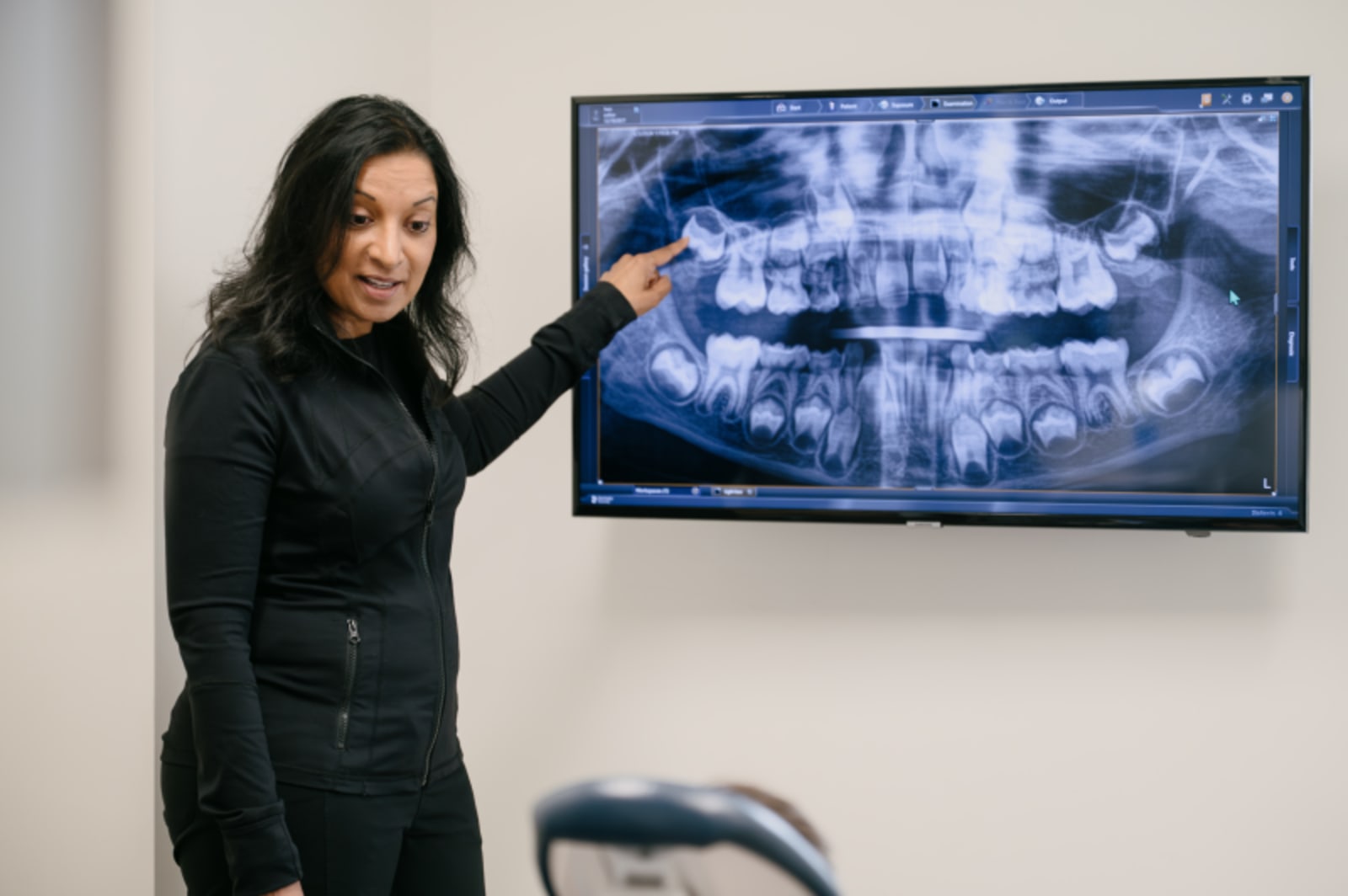
That standard of care doesn't happen by accident. It's built into every step of how in-office aligner treatment works, and understanding what's actually included in that fee changes how you think about the cost entirely.
When you start clear aligner treatment at a dental office, the upfront investment covers a lot more than a set of trays. Before a single aligner is made, your care team is building a complete clinical picture of your oral health. That process typically includes:
- A comprehensive exam to assess the current state of your teeth, gums, and jaw
- Diagnostic X-rays to catch anything that isn't visible to the naked eye
- A bite assessment to understand how your teeth come together and where movement needs to be precise
- Custom treatment planning developed by a dentist who can factor in your full oral health history, not just your alignment goals
- Progress monitoring appointments throughout treatment (typically every 6-8 weeks)
- Refinement aligners if your teeth don't track as planned
- Retainers and retention planning to maintain your results
That comprehensive approach addresses one of the biggest concerns patients have: what happens when something doesn't go according to plan? A dentist isn't just designing a smile. They're making clinical decisions about whether your gums can handle the planned movement, whether there's any underlying bone loss to account for, and whether your bite will actually function better at the end of treatment. That judgment doesn't stop after the first appointment, either. It continues through every in-person check-in, every progress evaluation, and every moment where something isn't tracking the way it should.
When a tooth isn't moving correctly, your dentist can course-correct before a small deviation becomes a bigger problem. This is where the complexity of orthodontic treatment becomes clear — it's not just about moving teeth, it's about managing the dozens of variables that affect how teeth respond to pressure. Root shape, bone density, gum health, and bite patterns all influence treatment outcomes.
We see this regularly in our practice. Dr. Fraiz often catches issues during routine check-ins that would have led to poor outcomes if left unaddressed. The patient stories reflect this experience consistently — people mention feeling like they were given all their options and that our team took the time to explain what was actually happening with their care. That transparency around treatment complexity is what thoughtful oversight looks like from the patient side.
What Mail-In Companies Don't Tell You About the Process
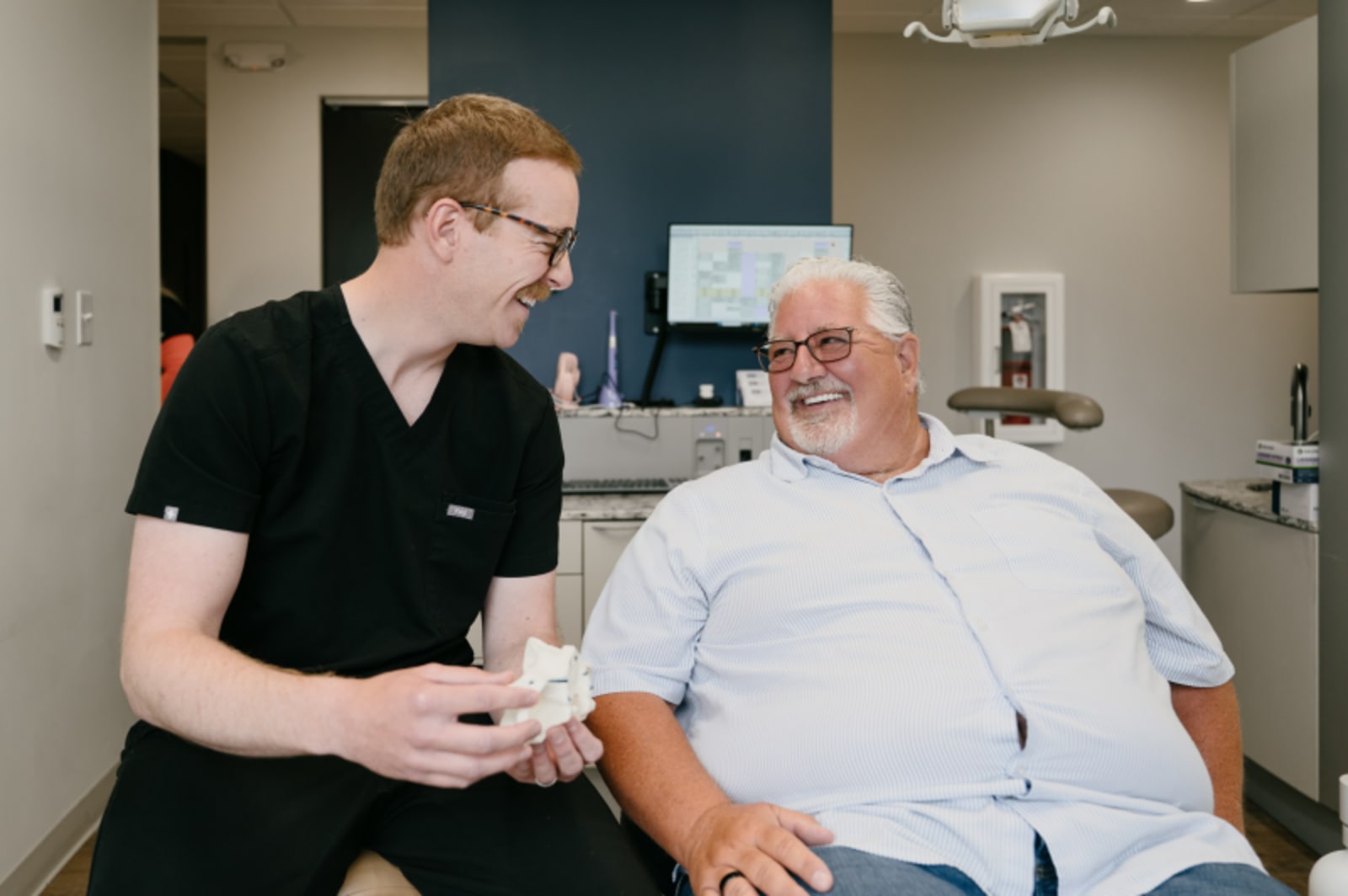
Thoughtful oversight requires a complete clinical picture before any treatment begins. The mail-in aligner model skips this entirely, and the gaps are significant.
The typical mail-in process: you order a kit, take impressions at home or visit a scanning location, and a treatment plan gets generated remotely. What doesn't happen is equally important. No dentist examines your jaw alignment or evaluates how your bite functions under clinical conditions. No X-rays check for bone loss, root resorption, or gum disease that might be quietly present before your teeth start moving.
Those missing steps create real risks. Teeth shifting without a baseline assessment of your oral health can accelerate problems that were never caught in the first place. Gum disease, bone loss, and bite irregularities don't pause while your teeth move. Movement without that foundation can make those issues significantly harder and more expensive to address later.
The transparency question matters too. Many patients report feeling uncertain about what was actually being evaluated during their mail-in consultation, or whether anyone with clinical training reviewed their case at all. When you're investing months of your time and thousands of dollars, knowing who's making decisions about your treatment plan isn't an unreasonable expectation.
Questions worth asking any provider — mail-in or in-office — include: Who will review my treatment plan? What's their clinical background? What happens if my teeth don't track as expected? What baseline health assessments are included before treatment starts? The mail-in model makes some of these questions difficult to answer clearly.
We've found that patients appreciate knowing exactly what we evaluate and why before we recommend any orthodontic treatment. Dr. Fraiz explains the clinical reasoning behind treatment decisions, not just the cosmetic outcome. That level of transparency tends to build confidence in whatever path forward makes the most sense.
The Costs That Don't Show Up in the Comparison Ad
Anyone with a financial planning mindset knows that the sticker price is rarely the whole story. Total cost of ownership is the number that actually matters, and orthodontic treatment is no different.
Mail-in aligner companies lead with a lower upfront number, and that number can look compelling at first glance. But a proper evaluation exists precisely to catch the cases where unsupervised treatment creates problems that cost significantly more to correct later. Root resorption, gum recession, and bite irregularities are real clinical risks when tooth movement happens without ongoing professional oversight. None of those outcomes are covered by a mail-in company's warranty or support policy. The corrective work, if it's needed, comes entirely out of pocket.
Consider what happened to one patient who came to us after a mail-in treatment went sideways. The original $1,800 investment turned into $8,500 in corrective work when her bite shifted incorrectly and caused jaw pain. The mail-in company's response? "Treatment completed as planned." The warranty covered replacement aligners, not the consequences of the movement itself.
There's also a quieter cost buried in the fine print. Many mail-in plans quote a base price that doesn't include refinements if your teeth don't track as planned, or retainers once treatment ends. Some charge $99 per additional aligner set. Others require a completely new treatment plan at full price if the first round doesn't work. When we plan clear aligner therapy, refinements and retainers are part of the conversation from day one, because the goal is a finished result, not just a starting price.
Before you compare two numbers side by side, ask these specific questions:
- What happens if my teeth don't move as planned? Who pays for additional aligners?
- Are retainers included, or is that a separate cost?
- If something goes wrong with my bite or gums during treatment, who addresses it?
- What's the total cost if I need the maximum number of refinements allowed?
- Is there a dentist I can see in person if problems arise?
The answers to those questions matter more than the advertised price. A $3,000 treatment that includes everything you might need can cost less than a $1,500 treatment that nickels and dimes you for every adjustment.
When Mail-In Aligners Are and Aren't Appropriate
What each option actually covers matters, but so does knowing whether you're the right candidate for a particular approach in the first place. And that's where the conversation gets more nuanced than most comparison articles let it.
Mail-in aligners can work for a specific subset of cases. The ideal candidate typically has minor spacing issues (less than 2mm gaps), mild crowding in the front teeth only, healthy gums with no bleeding or recession, and a recent dental exam showing no underlying issues. Even then, success depends on consistent wear and following instructions precisely.
What disqualifies someone from mail-in treatment? More complex issues like significant bite problems, teeth that need rotation, cases requiring tooth extraction, active gum disease, or bone loss around tooth roots. These situations require ongoing clinical monitoring that remote treatment simply can't provide.
The challenge is that most people can't accurately assess their own candidacy. Gum disease often progresses without obvious symptoms. Bite issues that seem minor can become significant when teeth start moving. Root positioning and bone levels aren't visible without X-rays. We see patients regularly throughout the Indianapolis area who thought they were straightforward cases but needed more comprehensive treatment once we could evaluate everything clinically.
Cost plays into this decision too. If mail-in treatment doesn't work and you need to start over with professional care, you've essentially paid twice. Understanding your actual candidacy upfront can save both time and money in the long run.
If you're unsure which category you fall into, a comprehensive evaluation can clarify your options without any commitment to treatment. You'll know whether you're truly a candidate for at-home aligners or whether your case needs professional oversight from the start.
How to Make a Decision You Won't Regret in Two Years
A conversation with a dentist before committing isn't a detour. It's the step that makes every option after it more defensible. If you're someone who researches before you buy, compares before you commit, and generally wants to understand what you're actually working with, then getting a clinical read on your teeth first just makes sense. You're not locking yourself into anything. You're gathering the information that makes any path forward a smarter one.
When you do have that conversation, ask the questions that matter for your specific situation. What does the total treatment cost include? Are refinements covered if your teeth don't track as planned? What happens if you need additional procedures during treatment? How often will you need check-ins, and what do those visits cost? These aren't aggressive questions — they're the ones that prevent surprises later.
If a dentist looks at your bite, checks your gum health, and tells you you're a straightforward candidate for at-home aligners, you can move forward knowing that. If something more complex comes up — maybe some gum recession that needs attention first, or a bite issue that requires more precise movement — you'll be glad you found out before spending months on a treatment that couldn't address it. Either way, you're deciding with full information instead of hoping the fit is right after the fact.
We've found that patients who take this approach, whether they end up choosing in-office treatment or deciding mail-in aligners are right for them, feel more confident about their choice. They know what they're getting into, what it will actually cost, and what to expect along the way.
If you're ready to find out what your teeth actually need, we'd be glad to walk you through it. No pressure, just a real conversation about your options. You can reach whichever location is closest to you:
- Indianapolis: 9333 N Meridian St, Suite #225 - (317) 872-3465
- Shelbyville: 122 Lee Blvd - (317) 398-6399
- Greenwood: 997 E County Line Rd, Suite L - (317) 865-1193
You can also learn more about what we offer before you call. Whenever you're ready, we're here.

convenient
We invite you to enjoy trusted professionals, personalized treatment, and a great dental experience with three convenient locations to fit your life.

We can’t wait meet you
Request an appointment online to set up your first visit. We’ll be in touch soon.
schedule Appointment