All-On-X Dental Implants: Costs, Candidacy & Life After Treatment
All-inclusive Dentistry in Indianapolis
.svg)
What Are All-On-X Dental Implants? (And Who Are They Really For?)
If you've been researching options for failing teeth, significant tooth loss, or dentures that just aren't working anymore, you've probably come across the term "All-On-X" and wondered what it actually means in practical terms. All-On-X is a full-arch tooth replacement system that uses a small number of strategically placed implants (typically four to six) to support an entire row of teeth. Instead of replacing each tooth individually, a single fixed arch is anchored to those implants and stays in place permanently. It looks like natural teeth, functions like natural teeth, and doesn't come out at night.
All-On-X is designed for people who have lost most or all of their teeth on one or both arches, or who are facing that reality soon due to decay, gum disease, or bone loss. It addresses both the functional challenges and the emotional impact of living without a complete, stable smile. Many patients tell us they've avoided social situations or struggled with eating foods they once enjoyed. All-On-X can restore both confidence and function.
We serve patients across Indianapolis, with locations in Shelbyville and Greenwood designed to make this level of care accessible close to home. Our approach focuses on giving you complete information upfront, so you feel confident about your choice rather than pressured into a decision.
What You'll Find in This Guide
- The Procedure: Multi-stage process from consultation to final teeth, including temporary teeth the same day
- Candidacy: Bone density, gum health, and medical factors that determine if you're a good fit
- Cost Breakdown: Why pricing varies widely and what drives the investment
- Financing Options: Insurance coverage, payment plans, and using FSA/HSA funds
- Comparing Options: How All-On-X stacks up against dentures and individual implants
- Daily Life: What eating, cleaning, and maintenance actually look like long-term
- Common Concerns: Questions patients ask before committing, answered transparently
- Our Approach: How we handle evaluation, treatment, and ongoing patient support
How All-On-X Actually Works: The Procedure From Consultation to Final Teeth
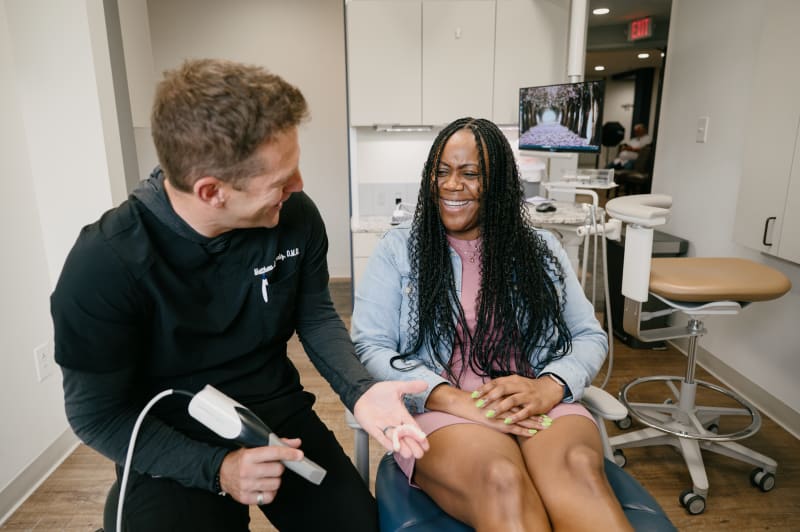
Understanding the process before committing makes sense for any significant medical decision. All-On-X is a multi-stage treatment measured in months, not a single afternoon in the chair. Many patients tell us they wish they'd understood the timeline better from the beginning, so we walk through each phase in detail during the consultation.
The treatment moves through these distinct stages:
- Extraction of failing teeth, if any remain that need to come out before implants can be placed
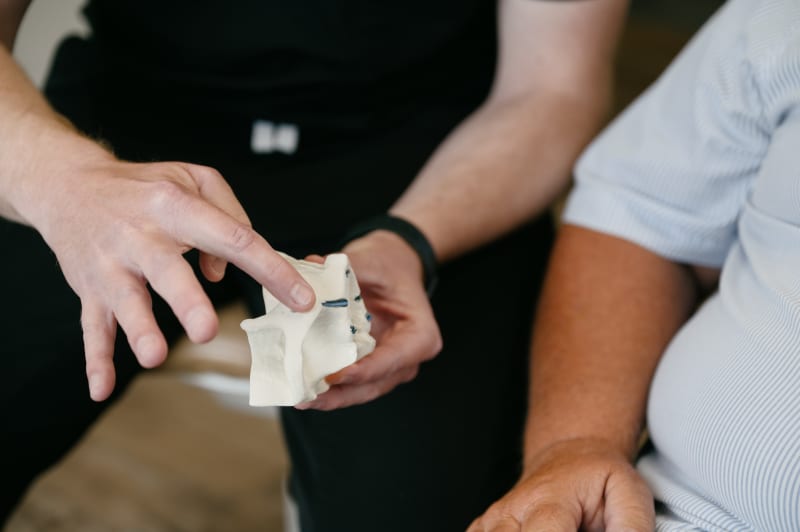
- Implant placement, where titanium posts are surgically positioned in the jawbone to serve as the foundation for your new arch
- Temporary teeth, often called "teeth in a day," which are attached the same day as surgery so you leave with a functional smile while healing begins
- Osseointegration, the months-long process where your bone fuses with the implants, creating a stable, permanent anchor
- Delivery of the final prosthetic, a custom-crafted arch designed to look and feel like your own teeth
The temporary phase often surprises patients in a positive way. You're not waiting months without teeth. You have a functional smile that allows you to eat, speak, and maintain your normal routine while the real integration happens underneath. These temporary teeth do have some dietary restrictions (avoiding very hard or sticky foods), but most patients find them far more comfortable and stable than they expected.
The final prosthetic is built after your implants have fully integrated, which means it's engineered to fit a stable, healed foundation. This timeline typically ranges from three to six months, depending on your individual healing response. Proper integration ensures your new teeth will last for decades rather than years.
For a deeper look at what each stage involves and what to expect week by week, our detailed guide on the All-On-X procedure walks through the full timeline. This section gives you the framework. That resource provides the specifics you need for planning.
Are You a Candidate? What the Evaluation Process Looks At
One of the most common things we hear from patients is some version of "I figured I wasn't a candidate." Maybe a previous dentist mentioned bone loss years ago, or you've had gum disease, or you're managing a health condition and assumed that closed the door. Many patients who come in expecting to be turned away end up being excellent candidates once we take a proper look.
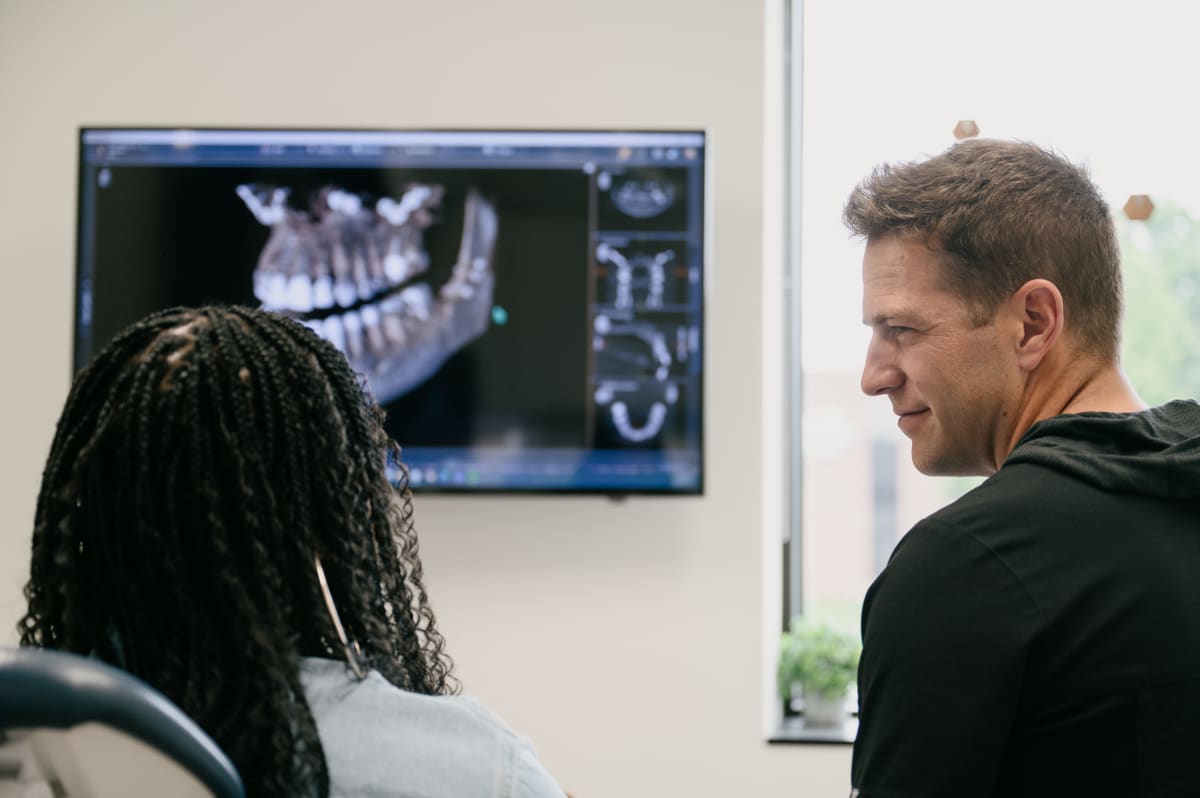
The evaluation process exists because there's no way to know without one. A conversation and a standard X-ray won't give the full picture. What actually tells the story is a 3D cone beam scan, which shows the precise dimensions of your jawbone, the position of nerves and sinuses, and the density of the bone available for implant placement.
During a candidacy evaluation, we assess several key factors:
- Bone structure: The scan reveals bone density, volume, and quality. Insufficient bone doesn't automatically disqualify you, as grafting procedures can often create the foundation needed for successful implant placement.
- Periodontal health: Active gum disease requires treatment before implant surgery, but this is a manageable step in the process rather than a barrier.
- Medical history: Conditions like diabetes, certain medications, and smoking habits affect healing timelines and may require modified treatment protocols.
- Bite patterns and jaw alignment: How your teeth come together affects implant positioning and the design of your final restoration.
These factors shape your treatment plan rather than determining candidacy. A patient with bone loss and controlled diabetes may still be an excellent candidate with the right preparation and timeline. The evaluation gives us the complete picture needed to design a treatment approach that works for your specific situation.
If you want to understand more about the implant process before your appointment, our dental implants page covers what to expect from evaluation through healing. Patient stories from people who were in similar situations can also provide perspective on what the journey actually looks like.
Understanding the Cost: Why the Price Range Is So Wide
If you've already started researching full-arch restoration online, you've probably noticed something frustrating: the price range is enormous. Quotes vary so significantly from one provider to the next that it can feel almost impossible to make a meaningful comparison. Understanding what drives that variation helps you evaluate quotes more effectively and avoid unexpected expenses.
The major cost variables include prosthetic material quality (zirconia versus acrylic), geographic market differences, and provider experience levels. When a quote seems unusually low, ask what's actually included. Some practices advertise a starting price that doesn't account for necessary additional procedures or use lower-quality components that affect longevity.
Critical questions to ask any provider:
- What happens if bone grafting becomes necessary during treatment?
- Are extractions included in the quoted price?
- What type of prosthetic material will be used for the final restoration?
- What's covered if an implant needs replacement or adjustment?
- Are temporary teeth included, or is that an additional fee?
We provide a comprehensive evaluation and detailed cost breakdown before you make any decisions. That means understanding your specific situation first, not providing a generic number. For more information about our approach to treatment planning and cost transparency, visit our dental implants page.
Financing and Insurance: Making the Investment Work
Figuring out how to pay for full-arch treatment is where many patients spend considerable mental energy, and rightfully so. Approaching this significant investment with strategic thinking makes complete sense.
Insurance coverage for All-On-X varies significantly between plans. Some contribute toward the surgical component, others toward the prosthetic, and some exclude implants entirely. We review your specific benefits during consultation, so you understand exactly what your plan covers before making decisions.
Most patients combine multiple funding sources rather than relying on insurance alone:
- Available dental insurance benefits
- FSA or HSA funds (requires timing coordination due to calendar-year deadlines)
- Third-party patient financing with extended payment terms
- Practice payment plans
FSA and HSA timing matters significantly. If you're already contributing to these accounts, coordinating your treatment timeline can reduce out-of-pocket costs. Some patients increase their FSA contributions for their treatment year.
During consultation, we walk through your complete financial picture, including potential additional costs that might arise. Our goal is helping you structure a payment approach that fits your budget without compromising care quality.
What Patients Tell Us About Their Treatment Decisions
When patients share their experiences with us, common themes emerge about why they chose All-On-X over other options. Many describe years of struggling with dentures that slipped during conversations or limited what they could eat. Others mention the relief of not having to remove their teeth at night or worry about adhesives failing at inconvenient moments.
Patients often tell us they wished they had understood earlier how different the daily experience would be with a fixed solution compared to removable options. The confidence that comes with knowing your teeth won't shift during important conversations or meals seems to be something many didn't fully anticipate until they experienced it.
For detailed accounts of what patients experienced during their decision-making process and treatment journey, you can read their stories on our patient stories page.
Life After All-On-X: What Daily Life Actually Looks Like

Once you've moved forward with All-On-X, the questions shift from "is this right for me?" to "what does daily life actually look like?" Based on our experience with patients across Indianapolis, Shelbyville, and Greenwood, certain patterns emerge consistently in how people adapt to life with their new teeth.
What Can You Eat?
Your diet opens up significantly compared to traditional dentures, though the transition happens in stages. During the initial healing weeks, you'll stick with soft foods while implants integrate. Once fully healed, patients often return to eating foods they'd avoided for years: corn on the cob, apples, nuts, and other foods that were challenging with dentures.
Some caution remains necessary. Very hard, extremely crunchy, or sticky foods can stress the prosthetic over time. Your care team will provide specific guidance based on your particular case and prosthetic material.
Daily Cleaning Routine
All-On-X restorations require consistent cleaning underneath where the arch meets the gum tissue. Bacteria can accumulate there just as it would around natural teeth. Your daily routine includes:
- Soft-bristle or electric brush for prosthetic surfaces
- Water flosser or floss threaders to clean beneath the arch
- Antimicrobial rinses as recommended
- Professional cleanings at determined intervals
Patients who maintain excellent oral hygiene enjoy their restorations for many years, while those who become lax with maintenance face preventable complications.
Adjustment Period
Most people adapt within the first few weeks. Initially, speech and chewing may feel different as your mouth adjusts to the new prosthetic. Unlike dentures, there's no adhesive, no removal at night, and no slipping during conversation or meals. Patients frequently describe the experience as the closest thing to having their natural teeth back.
Longevity Factors
Titanium implant posts can function for decades when properly maintained. The prosthetic arch may eventually need replacement depending on wear patterns. Factors that influence longevity include oral hygiene quality, professional maintenance, dietary habits, grinding or clenching habits, and overall health.
For detailed guidance on long-term maintenance, our dental implants page covers what to expect from the ongoing care process. You can also read about real patient experiences in our patient stories section.
Want To Move Forward With All-On-X Treatment?
If you're considering All-On-X treatment, we encourage you to schedule a consultation at whichever location works best for your schedule. There's no obligation to move forward with treatment, and many patients find value in simply understanding their options clearly:
- Indianapolis (N. Meridian): 9333 N Meridian St, Suite 225, Indianapolis, IN 46260
- Shelbyville: 122 Lee Blvd, Shelbyville, IN (317) 398-6399
- Greenwood: 997 E County Line Rd, Ste L, Greenwood, IN 46143 (317) 865-1193
You can also request a consultation online or call our main Indianapolis office at (720) 464-1672. We're here when you're ready to explore your options.
.jpg)
convenient
We invite you to enjoy trusted professionals, personalized treatment, and a great dental experience with three convenient locations to fit your life.

We can’t wait meet you
Request an appointment online to set up your first visit. We’ll be in touch soon.
schedule Appointment